
Research at ISA
References to published papers and conference proceedings for all ISA research activities can be found in the list of publications
Research Highlights
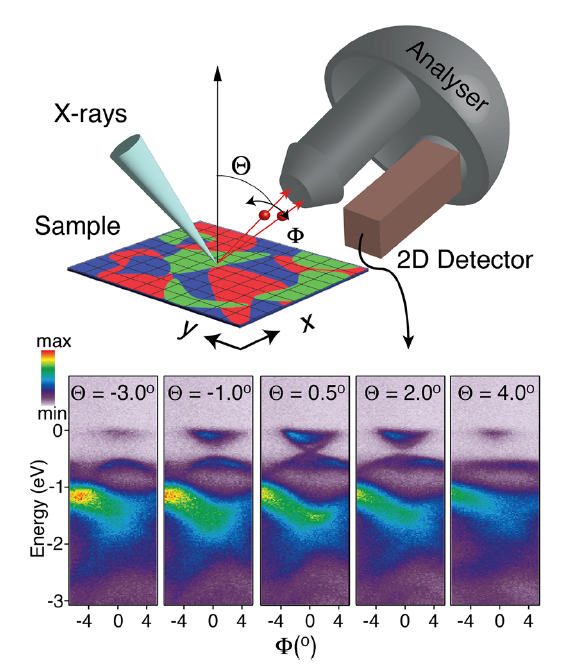
Angle-resolved photoemission spectroscopy (ARPES) is a technique used to map the occupied electronic structure of solids. Recent progress in x-ray focusing optics has led to the development of ARPES into a microscopic tool, permitting the electronic structure to be spatially mapped across the surface of a sample. Autonomous experimental control for the mapping of solids is implemented on the SGM4 micro-focus beamline. The protocol autonomously explores both momentum-space and real-space to identify regions of particular interest. As a proof of concept, this method
is applied to the quantum material Nb-doped Bi Se, known for its variations in co-existing chemical compositions and structural modifications, which
can lead to markedly different electronic structures. Additionally, gate voltages and applied currents in the study of electronic devices in operando
represent other intriguing parameters that can be investigated using such AI techniques. The combination of AI with spatially resolved ARPES opens up
new and exciting avenues for exploring quantum materials and devices. Read more about the SGM4 beam line where this research is carried out |
|
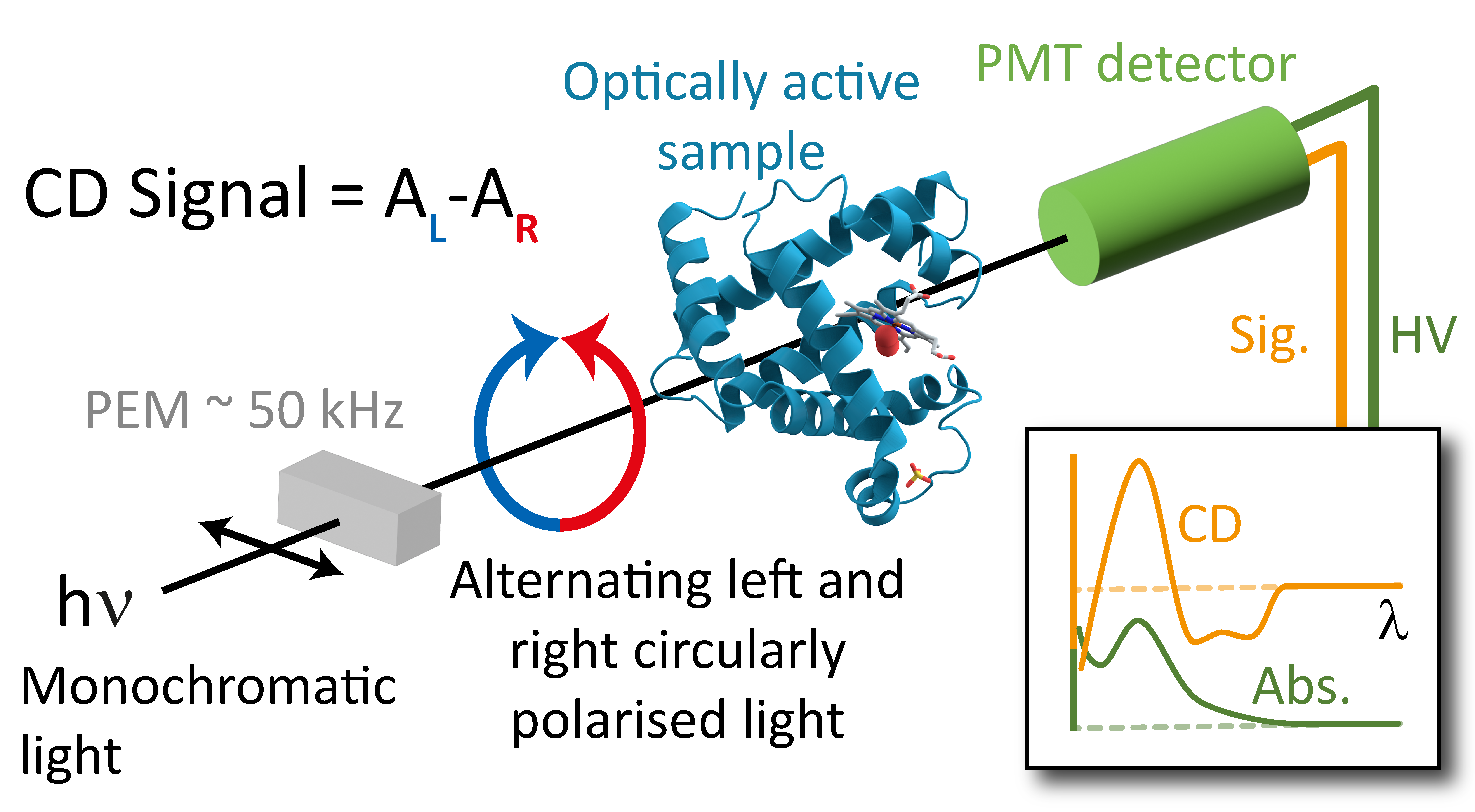
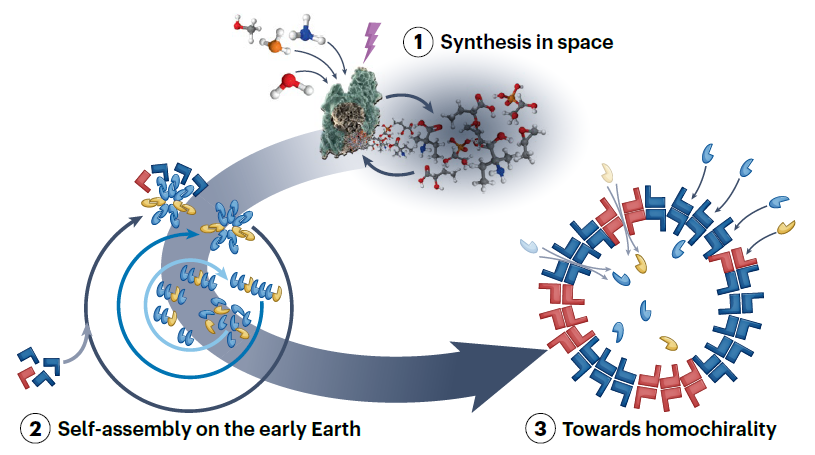
Circular dichroism (CD) spectroscopy is the measurement of the difference of absorption of left and right circularly polarised light. This established bio-physical technique performed on the AU-CD beam line, is used to investigate the secondary structure of peptides/proteins of interest to e.g. food science and health, as well as probing the building blocks of life. Lipids are among the best candidate biomarkers in exobiology. The chiroptical properties of the chiral backbones of phospholipids provide a guide
for future investigations into the origins of phospholipid membrane homochirality. Read more about the AU-CD beam line where this research is carried out |
|
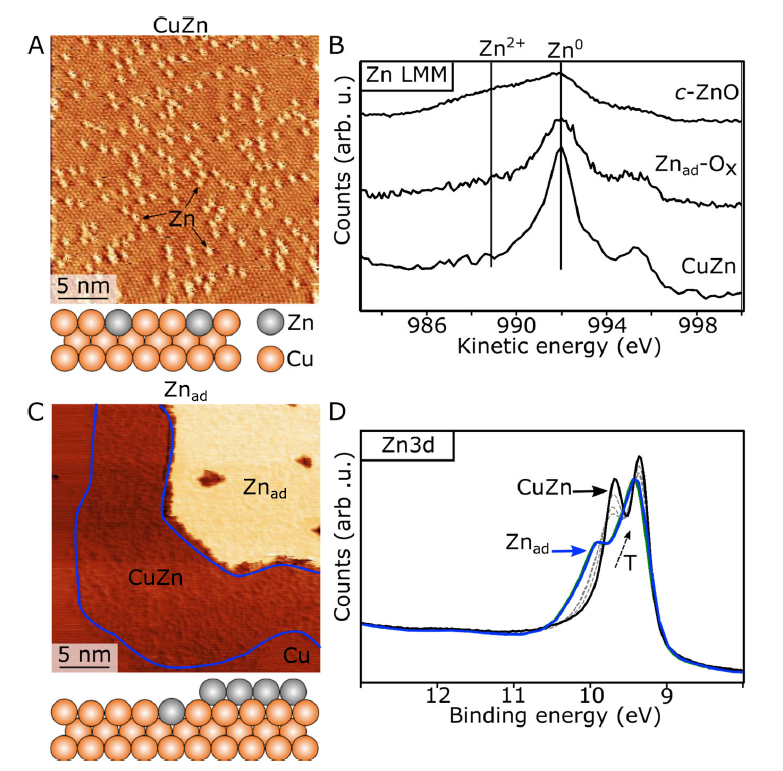
The surface-sensitive quantitative spectroscopic technique, x-ray photoelectron spectroscopy (XPS), carried out on MatLine, measures the elemental composition, chemical state and electronic state of the elements that exist within a material. Catalytic methanol production (CH3OH) receives significant attention due to the prospects of converting captured CO2 and green H2 from electrolysis into a liquid and transportable renewable fuel. Variable-temperature scanning tunneling microscopy at mbar pressure conditions is combined with X-ray photoelectron spectroscopy measurements to investigate the surface structures and chemical states that evolve when metallic Zn contained in a CuZn/Cu(111) surface alloy is exposed to reaction gas conditions for CO2 hydrogenation (CO2/H2) and synthesis gas (CO2/CO/H2). DOI: 10.1038/s41467-024-48168-6 Read more about MatLine where this research is carried out |
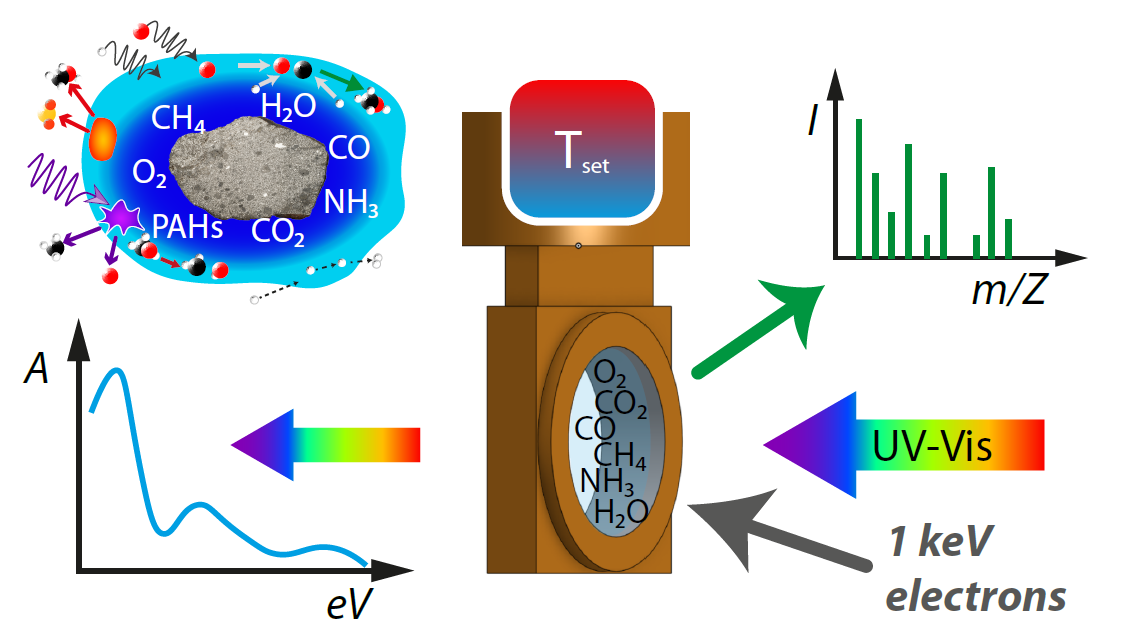
Vacuum ultraviolet (VUV) and ultraviolet–visible (UV-Vis) spectroscopy refers to photoabsorption spectroscopy of the ultraviolet and the adjacent visible regions of the electromagnetic spectrum (120 - 700 nm). At the AU-UV beam line, photoabsorption spectra of gas and solid samples are routinely acquired, with applications in astrophysics, space science, planetary science, astrochemistry and biology. Laboratory VUV spectroscopy of space relevant ices deposited at a range of temperatures (10-300 K) allows the interpretation of astronomical ice spectra
in terms of identification of molecules, ice morphology and local environmental conditions on the surface of icy moons and minor objects in our Solar system.
Space weathering can be simulated at the AU-UV beam line by exposing deposited ice samples to 1 keV electrons. VUV and UV-Vis spectra follow the formation and
destruction of chemical compounds, providing useful insights on the origin of molecular complexity in space that is relevant to life on Earth. Read more about the AU-UV beam line where this research is carried out |
|
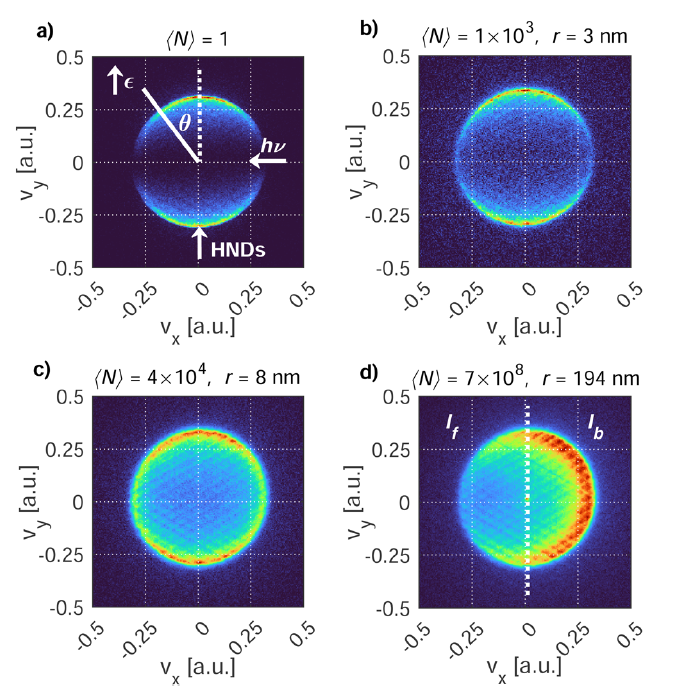 |
Helium nanodroplets are fascinating low-density matter systems due to their unique quantum fluid properties. Moreover, they are ideal model systems to unravel the complex interaction of condensed matter with ionizing radiation. Using extreme ultraviolet light from the AMOline, a variety of secondary processes are studied such as elastic and inelastic electron scattering within nanodroplets, inter-atomic transfer of energy and charge, electron-ion recombination and autoionization. These processes play important roles in the radiation chemistry of other types of weakly-bound systems such as aqueous solutions and living tissue. The figure shows velocity-map images of photoelectrons emitted from He atoms (a) and from He nanodroplets of variable size (b)-(d), illustrating the effect of
elastic scattering of electrons inside He nanodroplets. Read more about the AMOLine beam line where this research is carried out |
Applications for access to ISA research facilities
ISA welcomes applications, from national or international groups, for access to the beam lines on ASTRID2. See Access
Research on ASTRID2 is divided into the following areas:
Last Modified 15 May 2026